Dignity
Design and service begin with privacy, adulthood, respect, and control.
Accessible Horizons Community
An accessibility-first rural neighborhood and learning campus envisioned for Colorado's San Luis Valley.
Enter the vision ↓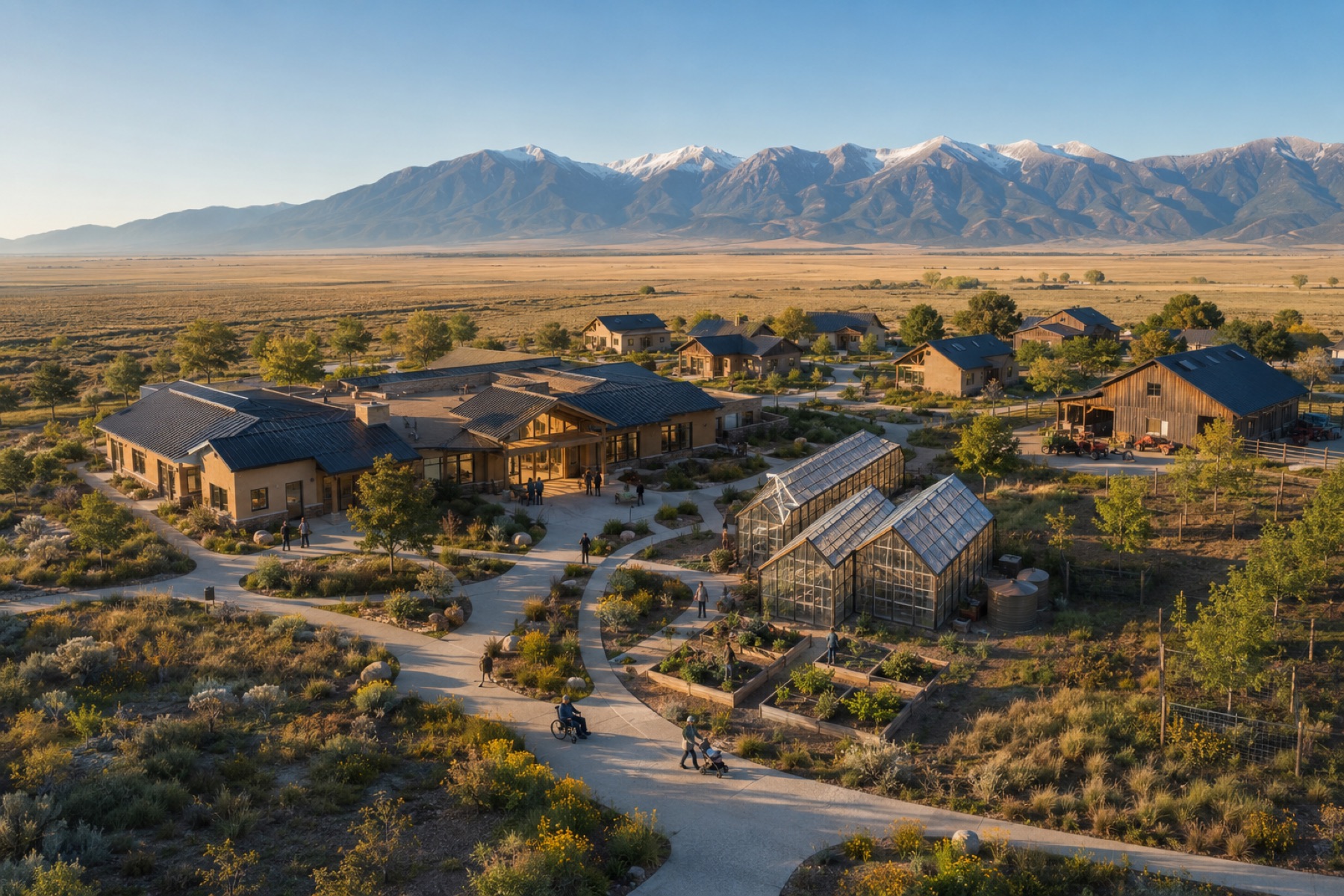
01 / The vision
Accessible Horizons Community is a long-range vision for a rural living, learning, employment, and community campus designed with disabled people—not merely for them. Its premise is that accessibility should not appear as a special route, a late accommodation, or a clinical overlay. It should shape the ordinary experience of arriving, moving, learning, working, resting, choosing, and belonging.
The envisioned setting is Colorado's San Luis Valley: a landscape with extraordinary possibilities for agriculture, outdoor learning, renewable energy, and a strong sense of place, alongside serious constraints involving water, distance, weather, healthcare, transportation, and infrastructure. Those constraints are not footnotes. They are decision gates.
“Accessibility should never be an accommodation added afterward. It should be the foundation upon which communities are built.”
What success means
The goal is not to create a self-contained world. It is to create a fully accessible home base with deliberate pathways into the wider community. Success would be measured through meaningful choices, skills, earnings, relationships, confidence, mobility, and access—not simply by buildings completed or people placed on a property.
02 / Non-negotiables
Design and service begin with privacy, adulthood, respect, and control.
Housing, work, education, supports, schedules, and relationships are never coercively bundled.
People participate as neighbors, colleagues, learners, teachers, hosts, and leaders.
Accessibility is integrated into beauty, circulation, operations, communication, and technology.
Jobs are real, competitively paid, appropriately supported, and connected to transferable skills.
The campus is a home base for participation in the San Luis Valley—not a substitute for it.
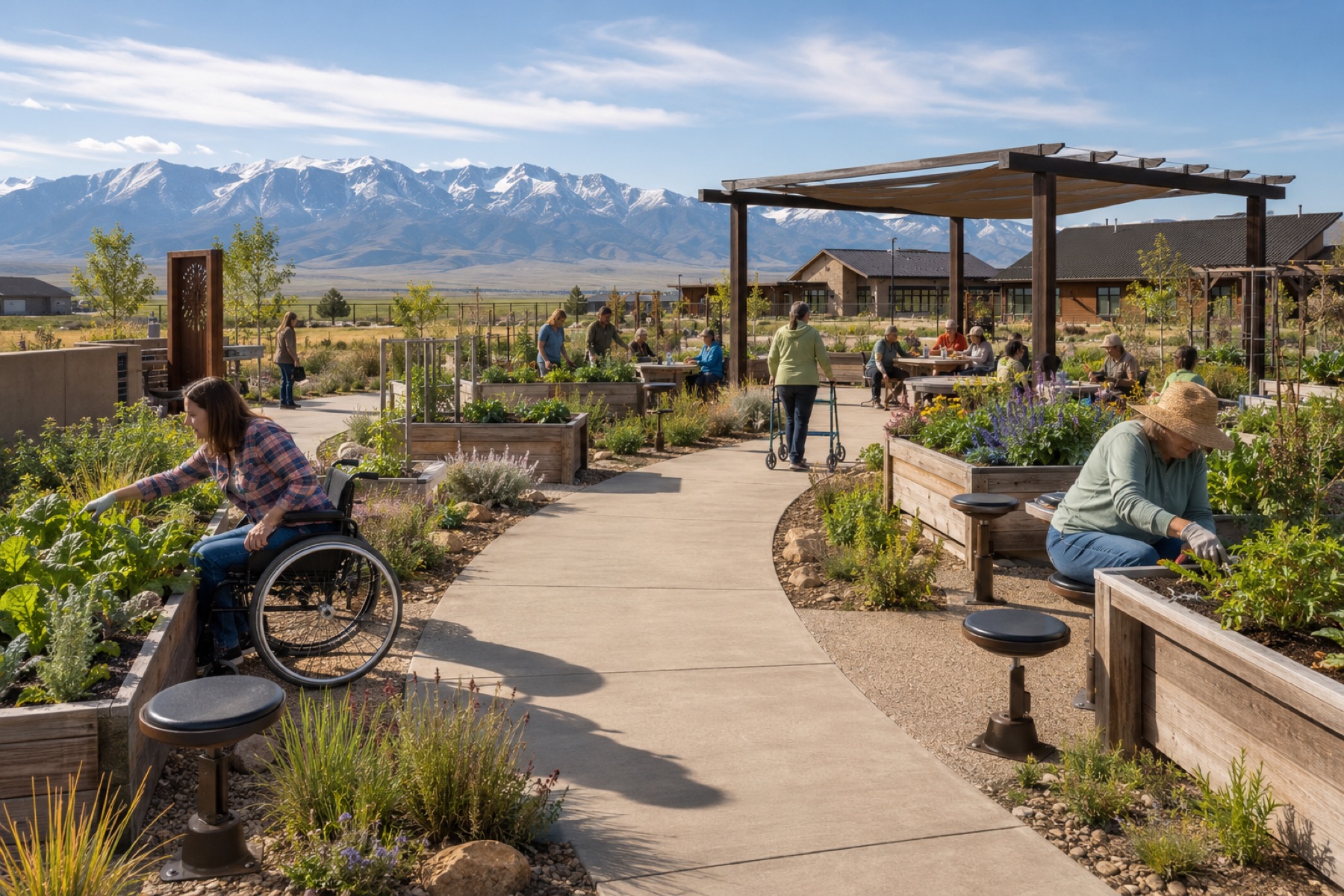
The proposed first public program
The first proposed program would be a scholarship-supported, multi-day educational stay for small groups of transition-age youth and young adults with disabilities. Lodging, meals, instruction, adaptive equipment, and scheduled activities would be included for scholarship recipients, with caregiver or personal-assistant participation when appropriate.
This program is proposed, not open for applications. Eligibility, staffing, safeguarding, clinical boundaries, insurance, transportation, and operating partnerships must be established before a pilot can be offered.
03 / The physical idea
The campus would read as a sequence of courtyards, front doors, gardens, working landscapes, and gathering places—not program buildings arranged around parking. The pathway network would connect every important destination as one continuous public realm.
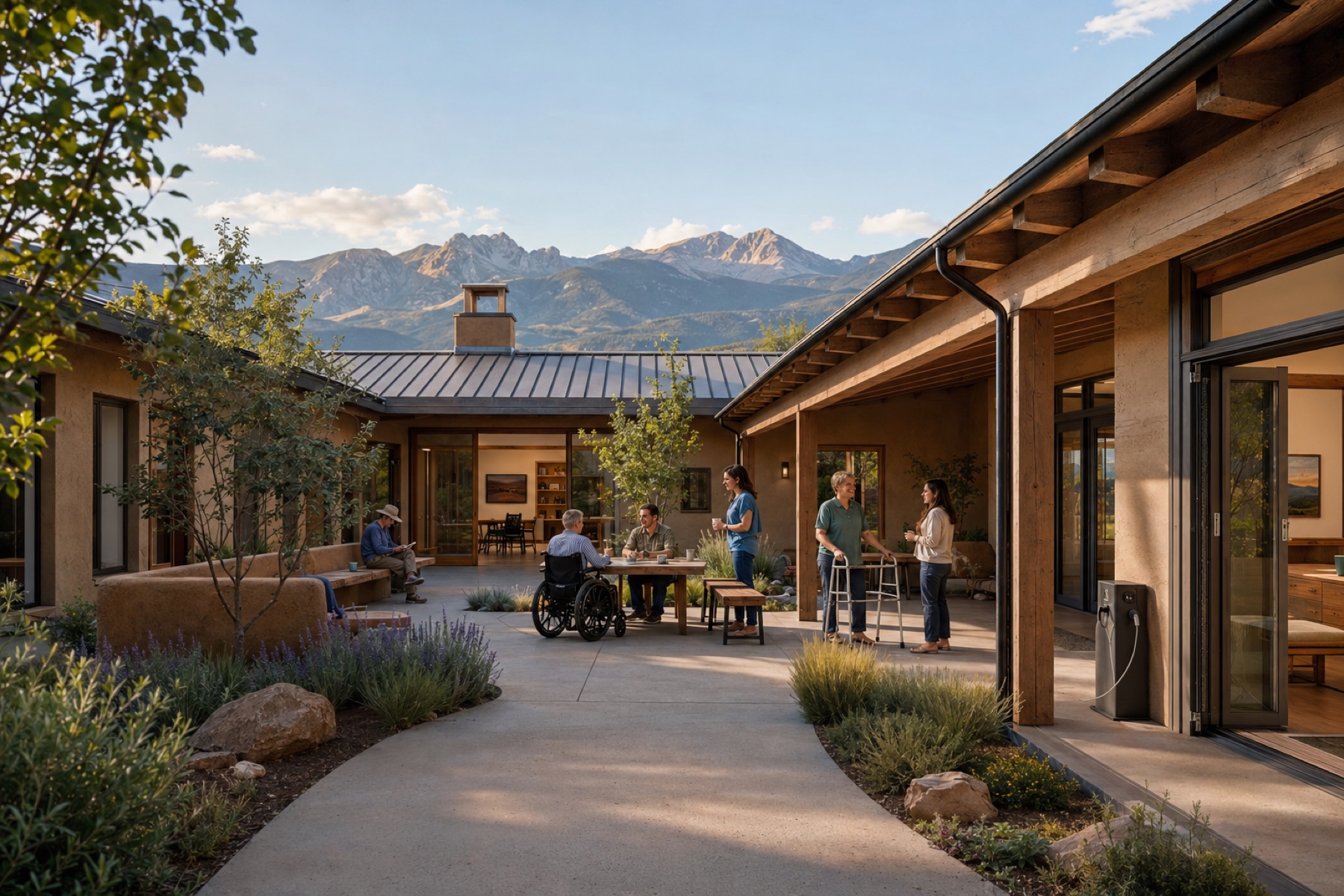
Learning center, teaching kitchen, shared dining, administration, gathering space, and a primary courtyard.
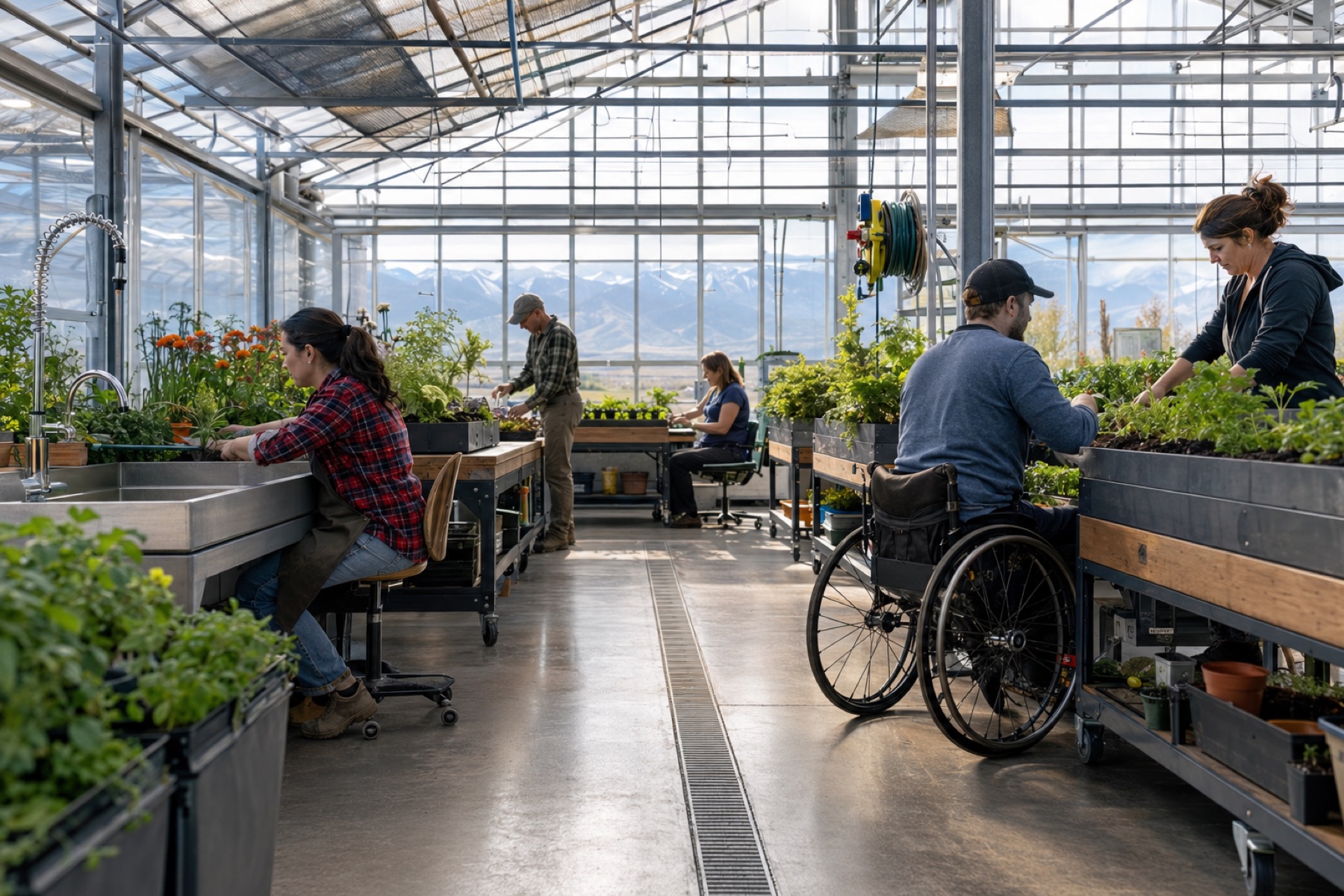
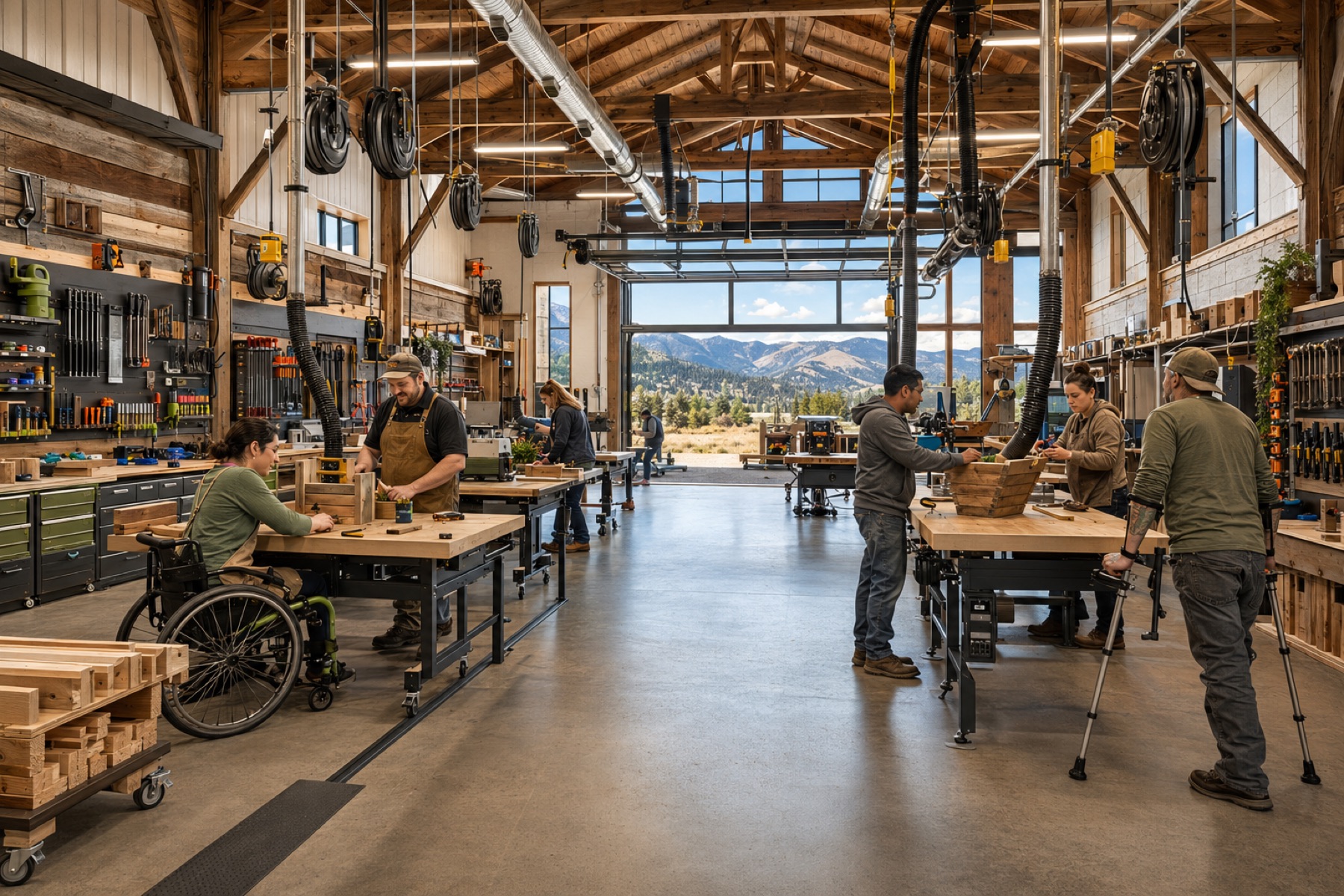
Greenhouses, gardens, orchard, food forest, animal areas, workshop, barn, and production support.
Small-scale rooms or cottages with caregiver options and direct access to the learning environment.
Independent homes with real front doors, privacy, shared greens, and connections to both campus and town.
Accessible trails, overlooks, recreation, quiet spaces, shade, weather refuge, and adaptive-mobility staging.
Water, wastewater, power, storage, communication, maintenance access, and dependable backup capacity.
04 / Meaningful work
Potential work could grow through greenhouse production, hospitality, culinary operations, animal care, grounds and facilities, retail, education, peer mentoring, administration, communications, and adaptive-equipment support.
Every position would require an ordinary written role, lawful hiring, competitive compensation, accommodations, training, supervision, performance expectations, advancement, and an accessible grievance process. Program participation cannot be disguised as unpaid labor.
05 / Rights and safeguards
A disability-specific rural campus could become isolating if one organization controlled housing, work, transportation, services, social life, and authority. Accessible Horizons is designed to confront that risk from the outset.
A resident's home cannot depend on working, studying, worshiping, receiving services, or socializing through the organization.
Residents should be able to select qualified outside providers and personal assistants wherever legally and operationally feasible.
Jobs use ordinary hiring, pay, supervision, advancement, and grievance processes. Employment status cannot threaten housing.
Transportation must connect people to healthcare, shopping, work, recreation, civic life, and relationships beyond the campus.
Homes include privacy, lockable doors, visitor choice, communication access, and control over daily schedules.
Residents hold meaningful authority through governance, accessible complaints, board representation, and independent advocacy.
06 / Development logic
Phases are decision gates, not promises attached to arbitrary dates. The project should stop, change, shrink, or wait whenever rights, safety, governance, funding, staffing, infrastructure, or evidence are not ready.
Build disability-led governance, listen, test demand, define program boundaries, establish parcel criteria, and complete early legal and financial feasibility.
Develop small, scholarship-supported educational experiences with qualified partners before making permanent commitments.
Secure an appropriate site only after water, access, entitlement, infrastructure, emergency response, and community connections are verified.
Add programming, employment, and facilities only when governance, demand, staffing, transportation, and operating revenue are ready.
Consider independent homes only after resident rights, service choice, transportation, sustainable operations, and community integration are demonstrably protected.
07 / What is real today
Current stage · Predevelopment
Accessible Horizons Community is a working title and a conceptual planning project. It is not yet an operating nonprofit or service provider. No parcel, zoning entitlement, water right, building program, tax-exempt status, public funding, operating license, residence, job, scholarship, or participant place is represented as secured.
The planning package establishes a mission, ethical framework, campus concept, program direction, governance logic, risk controls, accessibility standards, financial questions, and a phased development path. Each site-specific legal, architectural, engineering, clinical, financial, and operational decision will require qualified professional review, public-authority approval where applicable, and meaningful paid participation by disabled advisors.
Invite disabled people, families, advocates, local communities, public agencies, and practitioners to test the premise and expose its blind spots.
Establish transparent, disability-led decision-making, professional ownership of high-risk work, and clear accountability before fundraising or land decisions.
Explore partnerships and small pilot experiences before creating permanent infrastructure or implying future availability.
An invitation to improve the idea
The project needs critique before it needs applause. I welcome conversation with disabled advisors, San Luis Valley community members, accessibility professionals, counselors, educators, families, rural-development partners, employers, designers, and people willing to identify what this vision has not yet understood.
Start a conversation